
 By Wayne Peterson
Introduction: A Tangible Past in an Intangible Age
In an era increasingly defined by contactless payments, cryptocurrencies, and digital wallets, physical money appears to be fading into obsolescence. Many people now go weeks or even months without touching coins, relying instead on invisible transactions that move effortlessly through screens and servers. Against this backdrop, coin collecting might seem like a quaint or outdated hobby, a relic of a time when money had weight, texture, and sound. Yet coin collecting not only endures in the cashless world but arguably matters more than ever. Far from being a nostalgic indulgence, it serves as a bridge between history and the present, between material culture and digital abstraction, and between individual curiosity and shared human experience.
Coins as Historical Documents
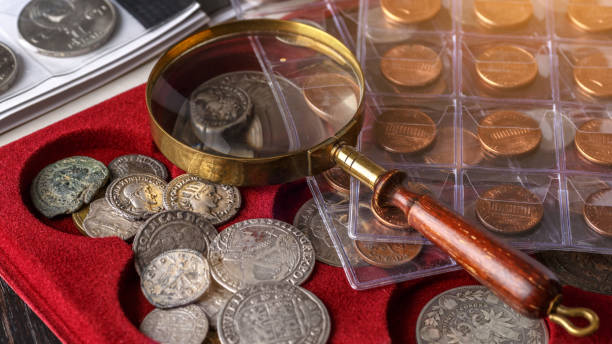
Coins are among the most enduring artifacts of human civilization. Unlike paper documents, which decay, burn, or are easily lost, coins are designed to last. Ancient Greek drachmas, Roman denarii, medieval silver pennies, and early modern gold ducats still exist today in remarkable condition. Each coin carries within it a compressed record of the society that produced it. The ruler whose portrait appears on its surface, the symbols chosen to represent power or faith, the metal used, and even the quality of the minting all reveal information about political authority, economic strength, technological skill, and cultural values.
In a cashless world, where transactions leave behind little more than digital entries, coins remain stubbornly physical witnesses to history. Collecting them is not simply about ownership but about engaging directly with the past. Holding a centuries-old coin creates a tangible connection to people who lived, worked, traded, and dreamed long before modern financial systems existed. This directness is something no digital archive or virtual museum can fully replicate.
Preserving Cultural Identity Through Currency
Currency is never neutral. Every nation uses money to tell a story about itself. National heroes, revolutionary moments, religious symbols, and architectural landmarks often find their way onto coins. Even small design choices reflect deeper narratives about identity and belonging. Coin collecting preserves these narratives at a time when globalization and digital finance increasingly blur national distinctions.
As cashless systems standardize transactions across borders, local monetary traditions risk being forgotten. Coins from defunct states or former political systems become especially important. They remind us that borders shift, ideologies rise and fall, and nations reinvent themselves. Collectors, in this sense, act as informal custodians of cultural memory, safeguarding artifacts that might otherwise disappear from public awareness.
Coins as Educational Tools in a Digital Generation
For younger generations raised on smartphones and instant information, coins offer a different mode of learning. Coin collecting encourages patience, close observation, and critical thinking. Identifying a coin requires attention to detail, research into historical context, and an understanding of economics and metallurgy. These skills contrast sharply with the rapid consumption of information typical of digital environments.
In educational settings, coins can make abstract concepts concrete. Inflation becomes more understandable when comparing the metal content of coins across eras. Political change feels more real when traced through shifting portraits or slogans on currency. In this way, coin collecting becomes a gateway to broader learning, fostering curiosity that extends well beyond the hobby itself.
The Human Desire for Tangibility
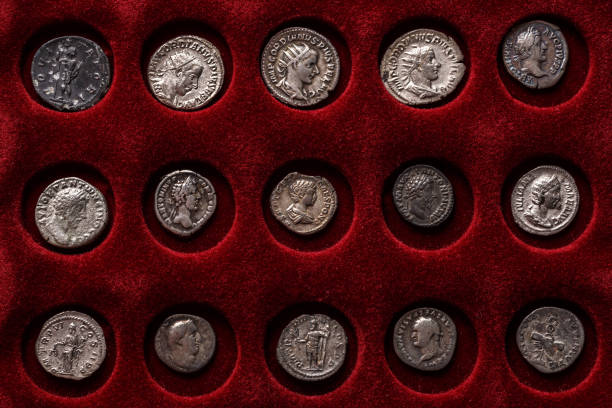
The rise of digital finance has brought convenience and efficiency, but it has also increased a sense of abstraction. Money now exists primarily as numbers on a screen, detached from physical experience. Coin collecting pushes back against this trend by reaffirming the value of tangible objects. The weight of a coin, the wear on its surface, and the marks left by circulation all tell a story of human use and interaction.
This tangibility satisfies a deep psychological need. Humans are sensory beings, and physical artifacts ground us in reality. In a world where value is increasingly virtual, coins provide reassurance that worth can still be felt and seen. Collectors often describe a sense of calm and focus when examining their collections, a contrast to the constant stimulation of digital life.
Coins and the Story of Economic Evolution
Coins chart the evolution of economic systems over thousands of years. From barter economies to metal-based currencies, from gold standards to fiat money, and finally to digital transactions, each stage has left its imprint in coinage. Collecting coins allows individuals to trace these transitions in a concrete way.
The debasement of coinage during times of crisis, the introduction of standardized denominations to facilitate trade, and the replacement of precious metals with cheaper alloys all reflect broader economic pressures and innovations. In a cashless world, understanding these historical patterns becomes especially important. Coins remind us that financial systems are not static or inevitable but human constructions shaped by circumstance, policy, and power.
A Counterbalance to Planned Obsolescence
Modern technology thrives on rapid replacement. Devices are designed to be upgraded, software becomes outdated, and digital platforms rise and fall within years. Coins operate on an entirely different timeline. A well-preserved coin can survive centuries, passing through countless hands without losing its essential form or meaning.
Coin collecting therefore stands as a quiet resistance to the culture of disposability. It values longevity, continuity, and care. Collectors often think in terms of generations, preserving their collections not just for themselves but for future heirs or institutions. In doing so, they challenge the assumption that everything of value must be new or constantly updated.
The Social and Communal Dimension of Collecting
Despite its solitary aspects, coin collecting is deeply social. Collectors exchange knowledge, debate historical interpretations, and share discoveries through clubs, exhibitions, and online forums. In a cashless world that can feel isolating despite constant connectivity, these communities offer meaningful human interaction centered on shared passion.
Coin shows and auctions bring together people from diverse backgrounds, united by curiosity and respect for history. Conversations sparked by a single coin can lead to discussions about archaeology, politics, art, and personal family stories. The hobby thus fosters connections that go beyond transactional relationships, emphasizing dialogue and mutual learning.

Coins as Personal Narratives
For many collectors, coins are tied to personal history. A coin inherited from a grandparent, found during travel, or saved from childhood can carry emotional significance far beyond its market value. These personal narratives give coins a second life as memory objects, linking individual experience to broader historical currents.
In a cashless world, where transactions leave little emotional residue, such objects gain importance. They anchor personal identity in physical form, reminding collectors of where they come from and what they value. This emotional dimension helps explain why coin collecting persists even as practical use of coins declines.
The Future of Coin Collecting in a Digital Context
Rather than being threatened by digitalization, coin collecting has adapted to it. Online databases, digital catalogs, and virtual marketplaces have expanded access to information and global exchange. Collectors can now research provenance, compare specimens, and connect with experts worldwide more easily than ever before.
Yet the core appeal of the hobby remains unchanged. Digital tools support the pursuit, but the object of fascination is still physical. This balance between technology and material culture positions coin collecting uniquely in the modern world. It demonstrates that digital progress does not require abandoning tangible heritage but can coexist with and even enhance it.
Conclusion: Why Coins Still Matter
Coin collecting still matters in a cashless world because it preserves what digital systems cannot fully replace. Coins are historical documents, cultural symbols, educational tools, and personal treasures. They remind us that money has always been more than a means of exchange; it is a reflection of who we are, what we value, and how we organize our societies.
As transactions become increasingly invisible, the importance of visible, touchable artifacts grows. Coin collecting offers continuity in an age of rapid change, depth in a world of surface-level interactions, and meaning beyond mere efficiency. Far from being rendered obsolete by cashless systems, coin collecting stands as a vital practice that keeps human history, identity, and curiosity firmly within reach.